

Conservative Tooth Restoration
Inlays & Onlays in Whittier, CA
Custom restorations that repair damaged teeth while preserving natural structure.
When a tooth is too damaged for a filling but does not require a full crown, inlays and onlays offer a durable and conservative restoration. At California Dental Group Whittier, these custom-made restorations are designed to strengthen teeth while maintaining as much natural enamel as possible. The result is a strong, natural-looking repair that helps restore comfort and function.

Boosting Confidence and Smiles with Expert Care
Inlays and Onlays for Strong, Conservative Tooth Repair
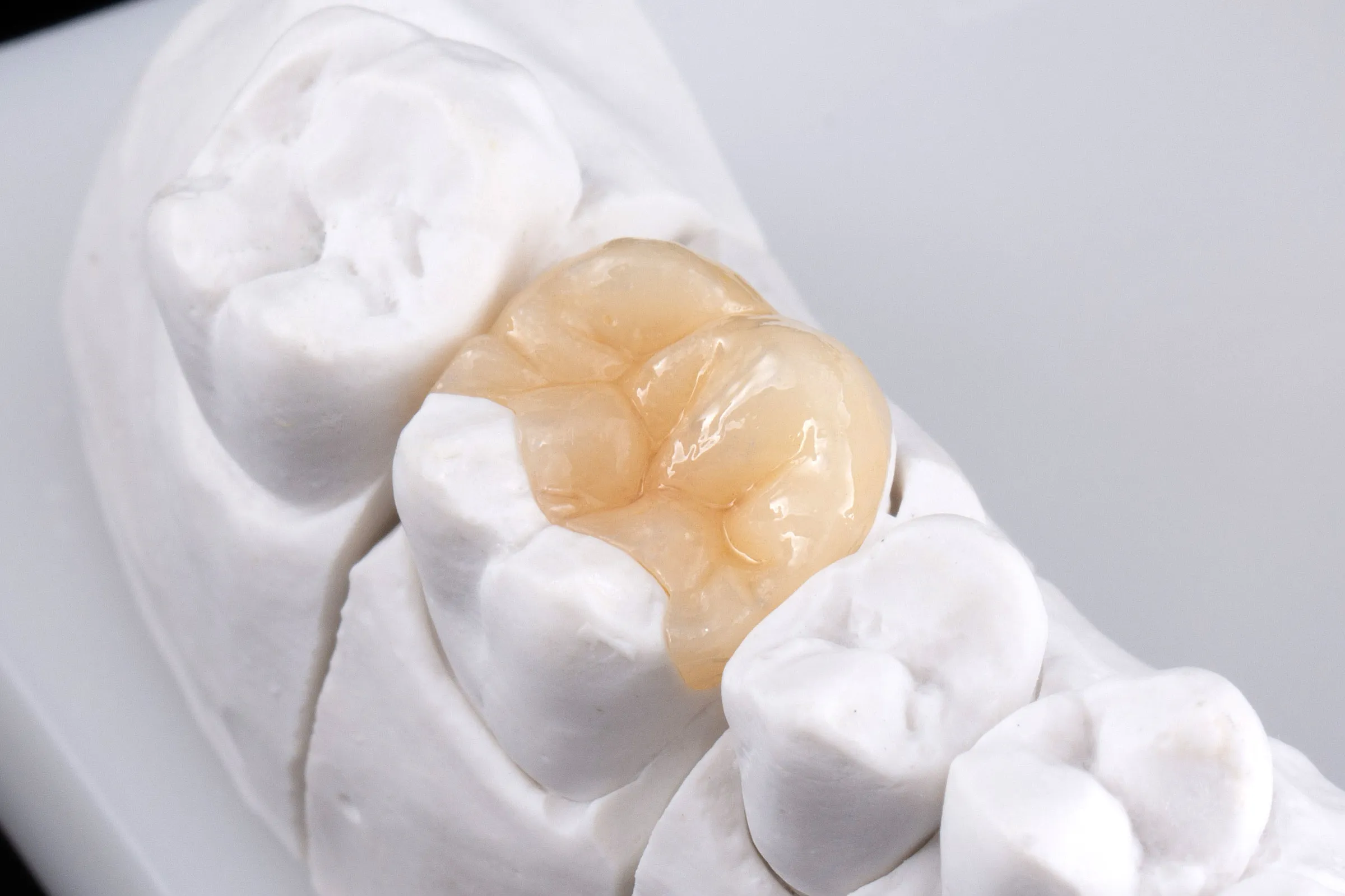
Inlays and onlays are custom restorations used to repair teeth that have moderate damage from decay or fractures. Unlike standard fillings, these restorations are created outside the mouth and bonded securely to the tooth. For patients in Whittier, inlays and onlays provide a durable solution that restores strength while preserving more natural tooth structure than a traditional crown.
What are inlays and onlays?
Both inlays and onlays are indirect restorations that reinforce a damaged tooth while blending naturally with surrounding enamel. The difference between them depends on how much of the tooth requires restoration.
- Dental inlays Fit within the grooves of a tooth and are used when the damage does not extend to the cusps.
- Dental onlays Cover a larger portion of the tooth and extend over one or more cusps for additional protection.
The inlay and onlay procedure
Creating an inlay or onlay typically involves two appointments to ensure a precise fit and long-lasting restoration. The tooth is prepared and impressions are taken so a dental laboratory can fabricate a custom restoration.
- Removal of damaged or decayed tooth structure
- Impressions taken to design the custom restoration
- Temporary protection for the tooth if needed
- Bonding the final inlay or onlay to the tooth
- Shaping and polishing for a natural appearance
Benefits of inlays and onlays
Inlays and onlays provide a balance between strength and conservation of natural tooth structure. They are often recommended when a filling would not provide sufficient durability.
- Preserves natural tooth structure Less enamel removal compared to full crowns.
- Durable restoration Designed to withstand chewing forces for many years.
- Natural-looking results Porcelain or composite materials are matched to your natural tooth color.
- Improved tooth strength Reinforces weakened teeth and helps prevent further damage.
Caring for inlays and onlays
Maintaining inlays and onlays is similar to caring for natural teeth. Brushing, flossing, and attending regular dental check-ups help ensure the restoration remains secure and the surrounding tooth stays healthy.
If you have a damaged tooth that may be too large for a filling, a consultation can determine whether an inlay or onlay is the right option to restore strength and protect your tooth.
Inlays & Onlays FAQ’s
- What are dental inlays and onlays?
- Inlays and onlays are custom-made restorations used to repair teeth with moderate damage or decay while preserving more natural tooth structure than a full crown.
- What is the difference between an inlay and an onlay?
- An inlay fits within the grooves of a tooth, while an onlay covers a larger portion of the tooth and may extend over one or more cusps.
- When are inlays or onlays recommended?
- They are often recommended when a cavity or fracture is too large for a standard filling but the tooth does not require a full crown.
- Are inlays and onlays durable?
- Yes. Inlays and onlays are typically made from strong materials such as porcelain or composite resin designed to withstand normal chewing forces.
- How long do inlays and onlays last?
- With proper care, inlays and onlays can last many years and may provide longer durability than traditional fillings.
- Will my restoration look natural?
- Yes. The materials used for inlays and onlays are color-matched to blend naturally with your surrounding teeth.
- Is the procedure painful?
- The treatment is usually comfortable because the tooth is numbed with local anesthesia during preparation.
- How long does the procedure take?
- Most inlay and onlay treatments require two visits: one for preparation and impressions, and another to place the final restoration.
- How should I care for my restoration?
- Maintain good oral hygiene with regular brushing, flossing, and routine dental visits to help keep the restoration and surrounding tooth healthy.
- How do I know if I need an inlay or onlay?
- A dental examination and imaging can determine whether an inlay, onlay, filling, or crown is the most appropriate treatment for your tooth.
